
Find Out What Could Fail First
Tree risk assessments in Lakeland help you spot hazards before wind, weight, or decay cause damage.
You walk past the same trees every day in Lakeland, and most of the time they look stable. But internal rot, weak unions, and root damage develop slowly and show few visible signs until a branch snaps or the trunk splits during a storm. A tree risk assessment evaluates structure, defects, growth patterns, and what sits below or near the canopy—your home, your car, your neighbor's fence—so you know where the real threats are.
The Tree Lady Company performs assessments using TRAQ-qualified arborists trained to identify structural weaknesses that increase the chance of failure. The arborist checks for co-dominant stems, included bark, cavities, leaning trunks, and root issues that compromise stability. You receive a clear explanation of what the tree is likely to do under stress and whether pruning, cabling, monitoring, or removal is the right response. The assessment is based on industry standards and the arborist's direct observation of the tree in your yard.
If you want to reduce liability and make decisions based on what the tree is actually showing, contact The Tree Lady Company to schedule a risk assessment in Lakeland.
How the Arborist Determines Risk Level
The arborist arrives at your Lakeland property and begins by looking at what could be hit if the tree or a branch fails. They note the distance to your roof, driveway, walkways, and neighboring structures. Then they inspect the tree itself, checking for visible defects such as cracks, fungal fruiting bodies, dead wood, and asymmetric canopies that suggest internal failure.
After the assessment, you will know whether the tree is low risk and can stay as is, moderate risk and needs pruning or support, or high risk and requires removal or significant intervention. The arborist explains what conditions led to the rating and what you can do to lower the risk if the tree is worth keeping. This is especially useful before hurricane season when high winds test every weak point in a tree's structure.
The assessment does not guarantee a tree will never fail, but it gives you a documented understanding of the likelihood and helps you prioritize which trees need attention first. It also supports long-term preservation by catching problems while they are still manageable. If multiple trees are involved, the arborist can rank them by urgency so you know where to start.
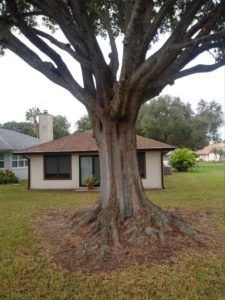
Homeowners often ask how risk levels are determined, whether assessments need to be repeated, and what happens if a tree is rated high risk. Here are answers to help you decide if this service fits your situation.
You Probably Have a Few Questions
If you are concerned about a tree near your home or want to prepare your property for storm season, a risk assessment from The Tree Lady Company gives you a clear picture of what needs attention. Reach out to schedule an assessment in Lakeland.